Fragile Matter: The Hilliard Permanent Collection and Beyond: Manon Bellet, Hannah Chalew & Harriet Joor
Hilliard Museum of Art
Lafayette, LA
September 2025-January 2026
curated by Aaron Levi Garvey
Fragile Matter brings together historic work from the museum’s permanent collection with contemporary art, creating a dialogue between past and present perspectives on Louisiana’s fragile ecosystem. The exhibition features Louisiana artist Harriet Coulter Joor (1875-1965) from the Hilliard’s permanent collection alongside contemporary Louisiana artists Manon Bellet (b. 1979) and Hannah Chalew (b. 1986).
Though shaped by different historical and cultural contexts, these three artists share a deep reverence for nature and an awareness of the delicate ecological state of the Gulf South. Through craft, material studies, and nuanced environmental understanding, their work creates an intergenerational conversation about our relationship to the natural world: how we mark it, mourn it, remember it, and find ourselves reflected in it.
Fragile Matter acts as both an ode and invitation, to touch the earth more gently, to reflect on the past more thoughtfully, and to imagine new futures through the fragile and poetic materials of the present.
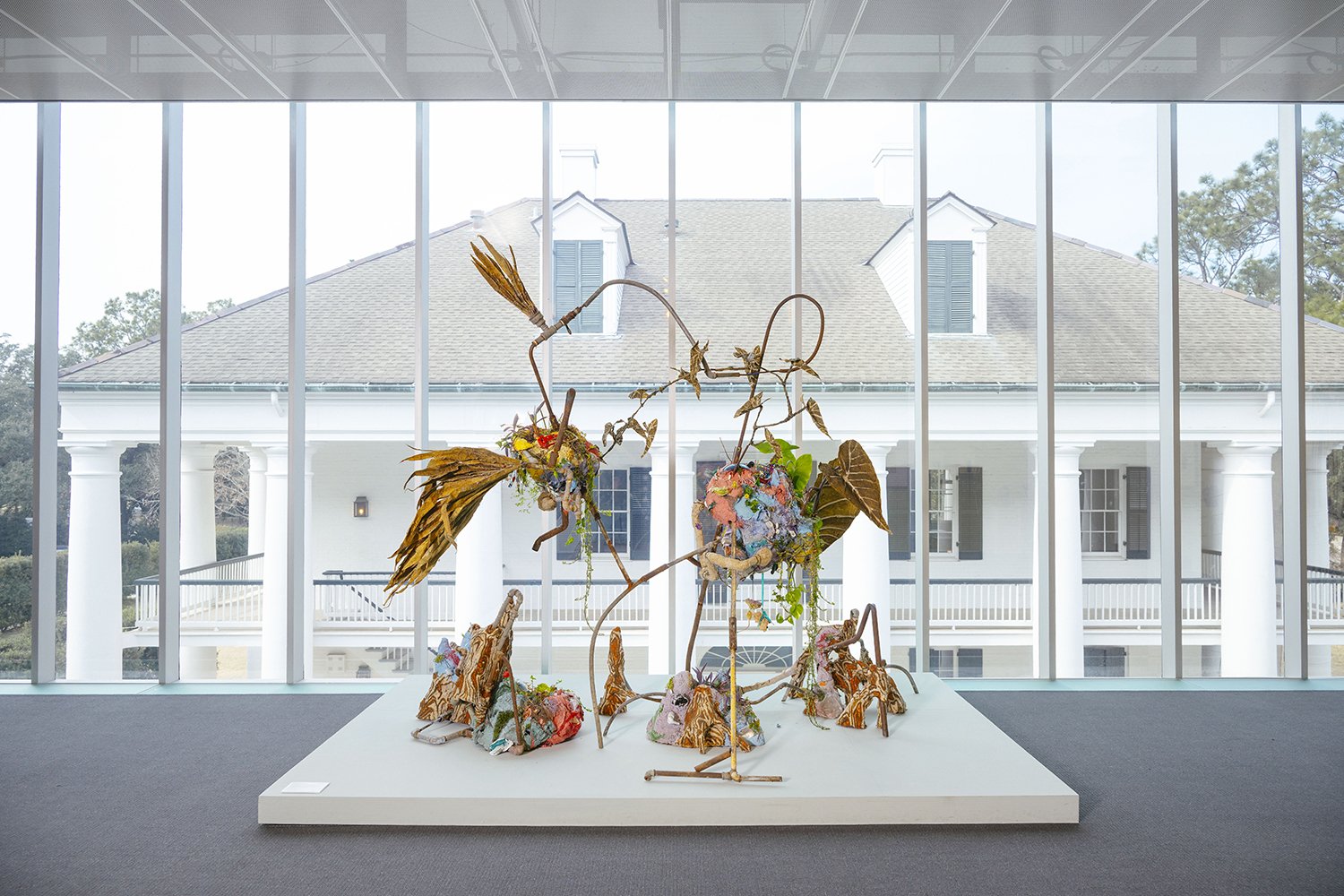
This exhibition included Bottomland Chimera, Miscible Zone, Feedback LOOP, and Palmate Cultivar
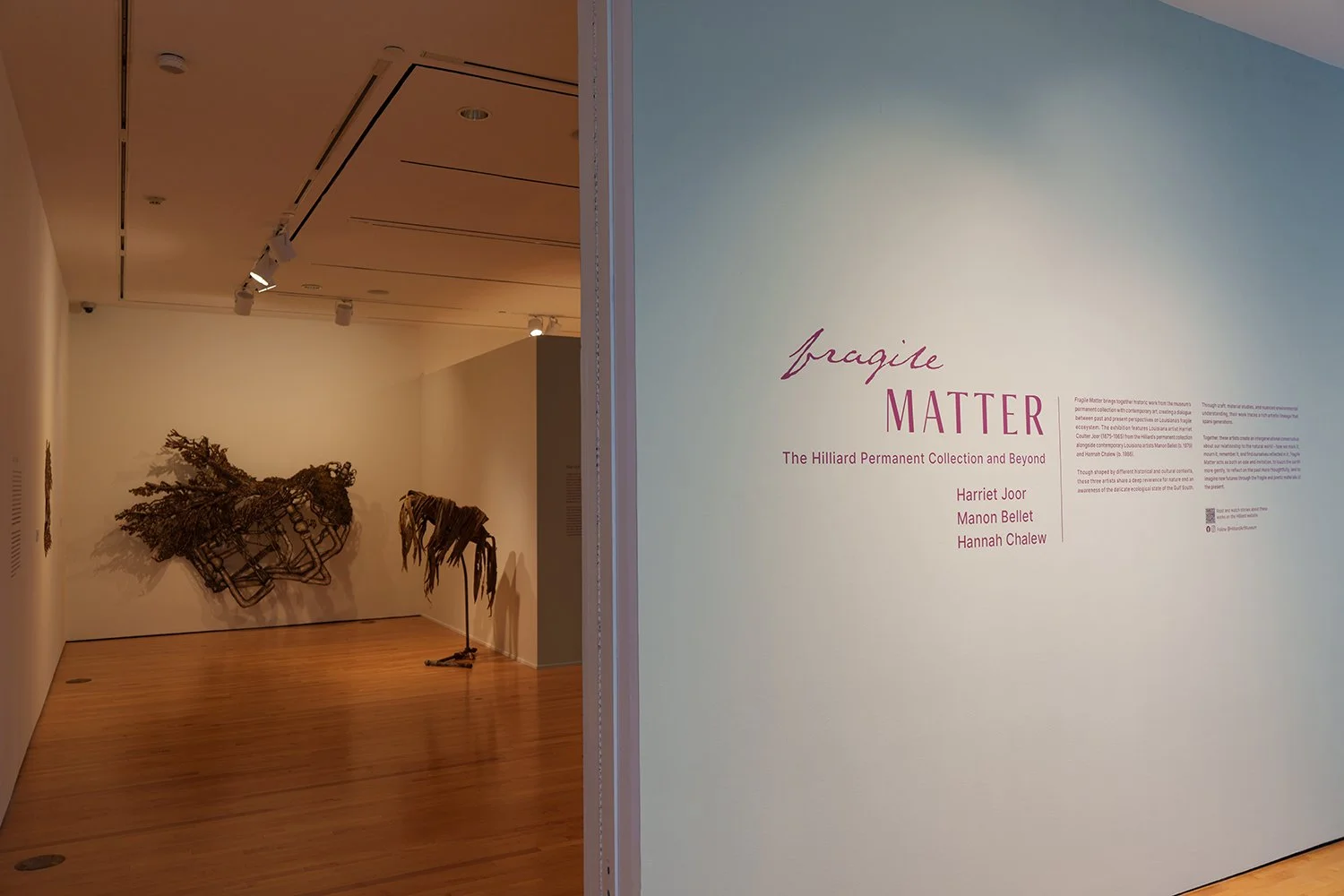
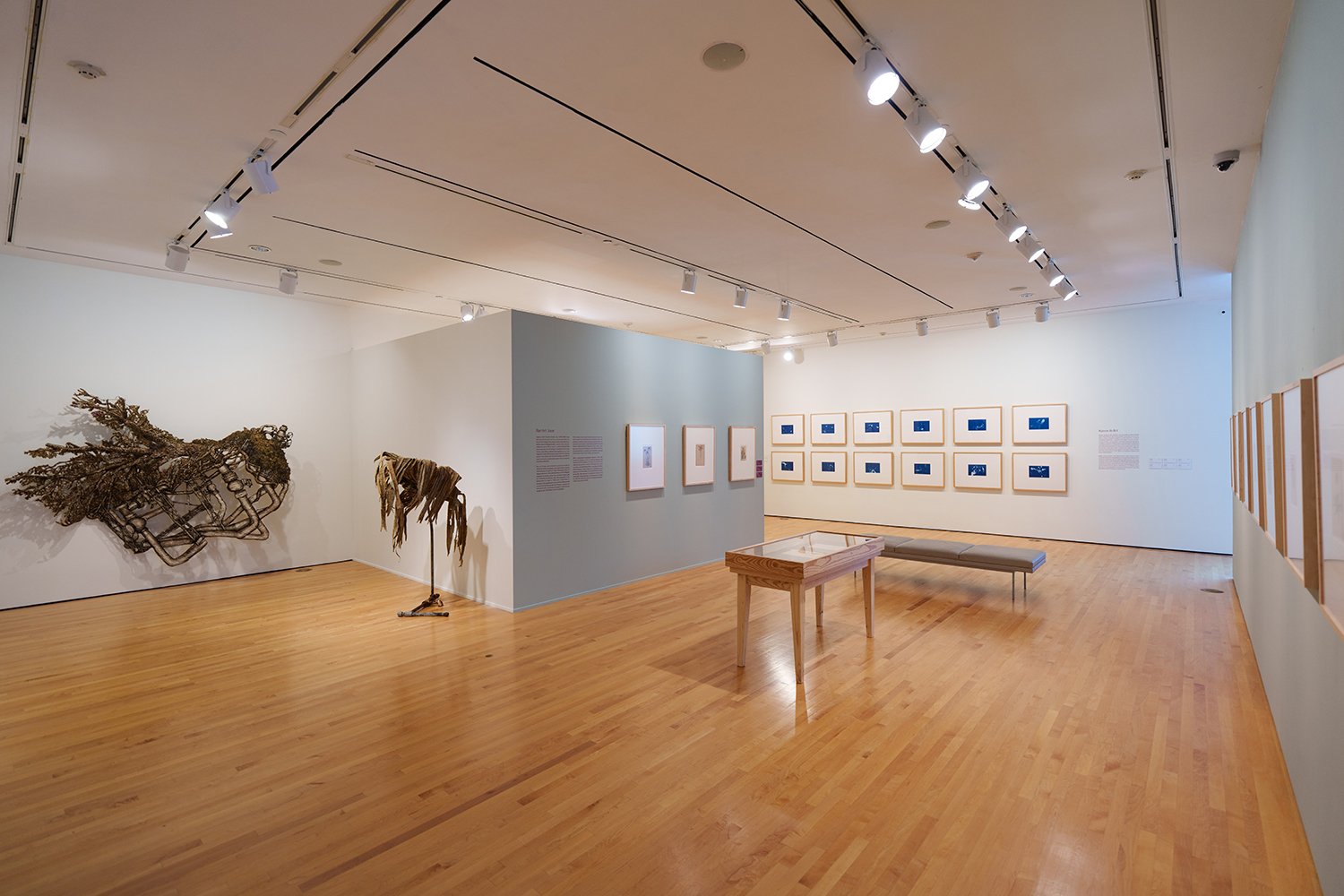
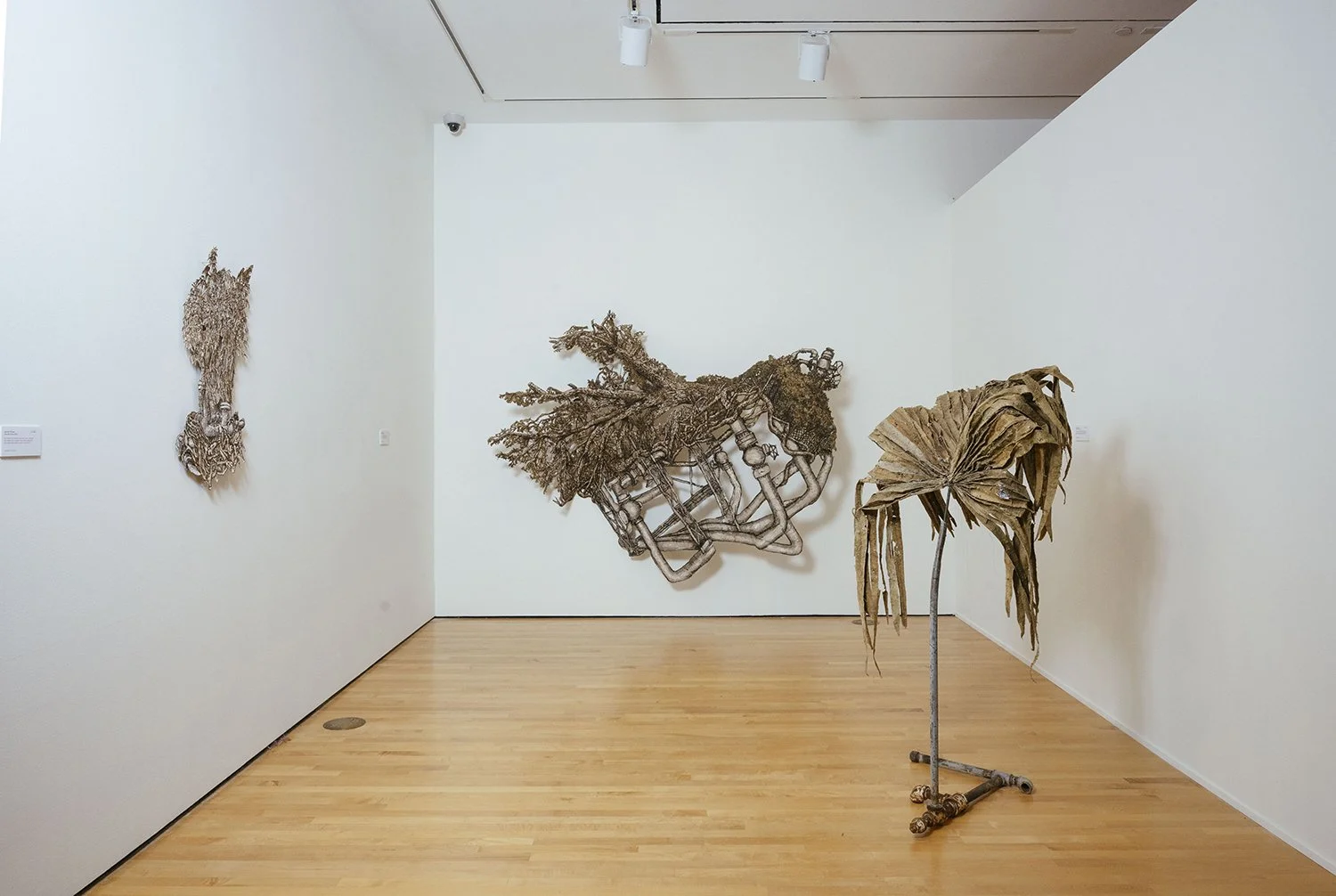
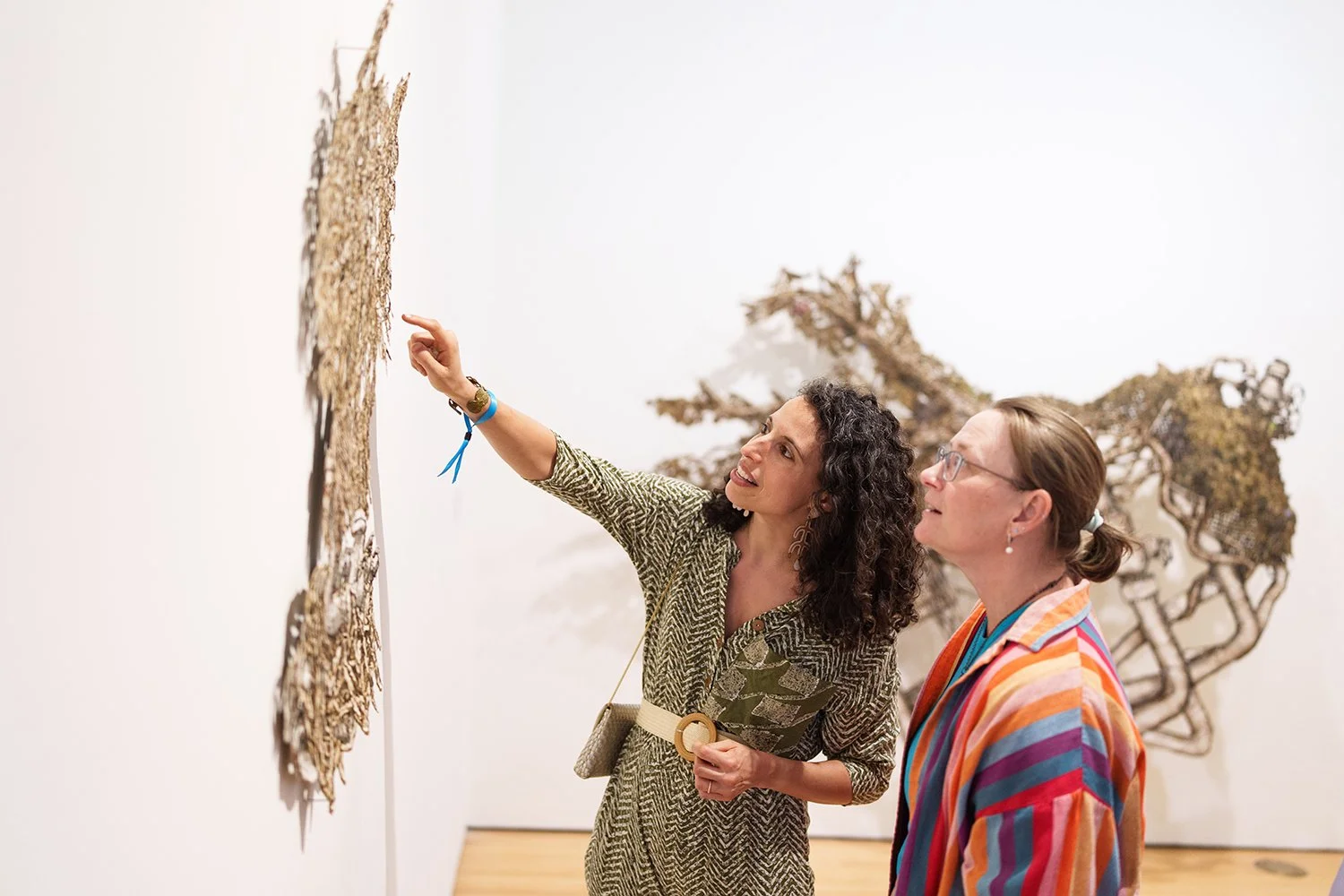
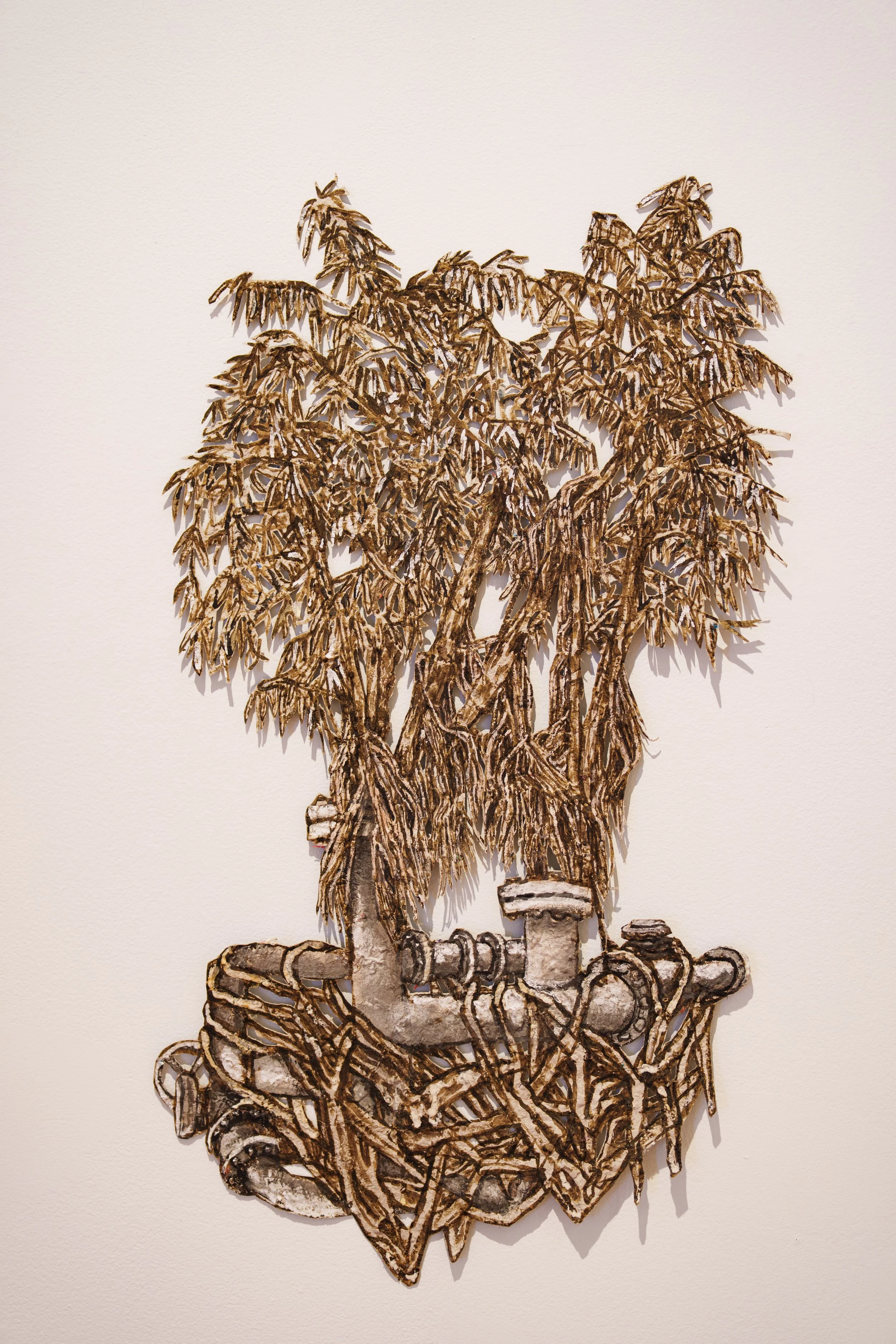
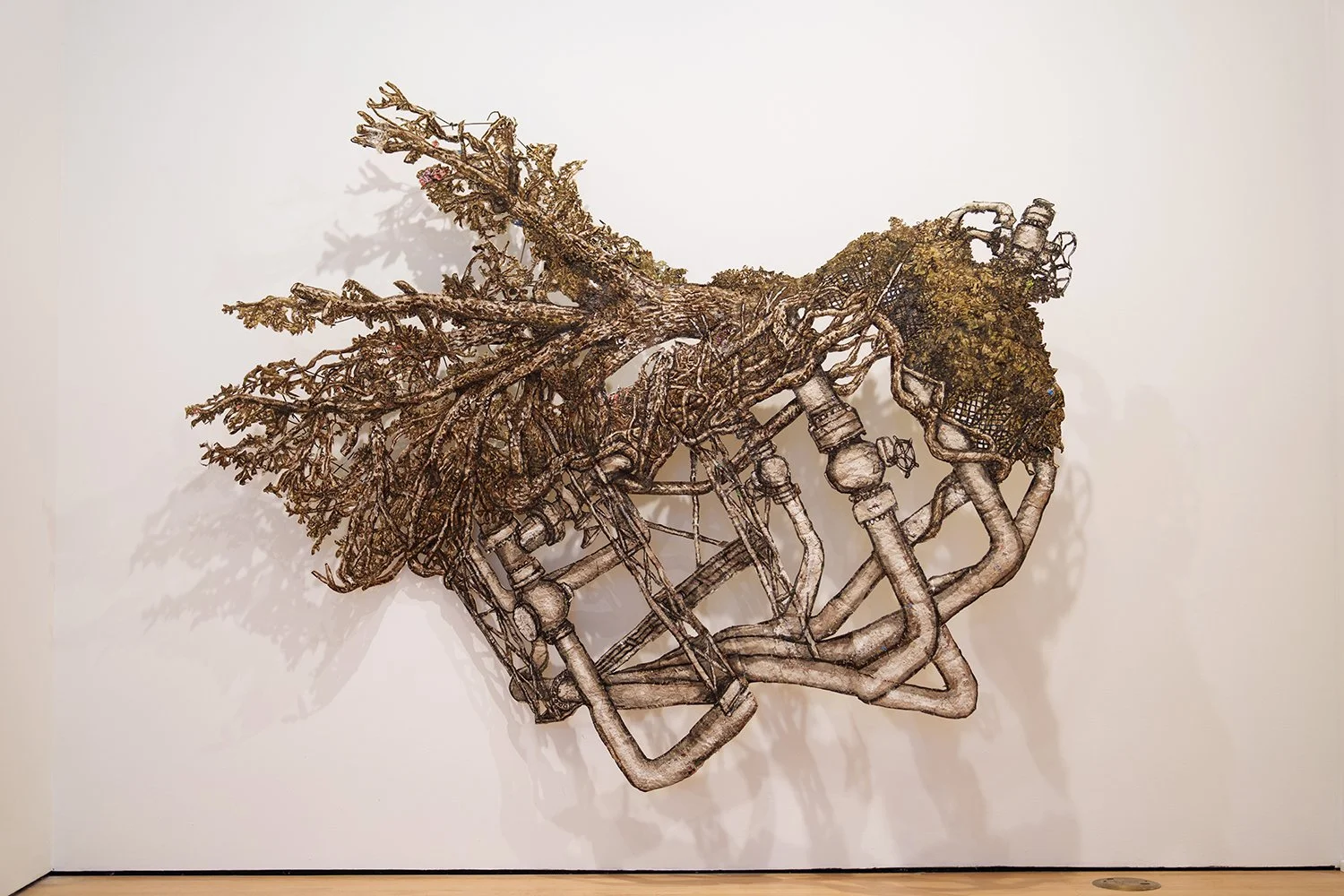
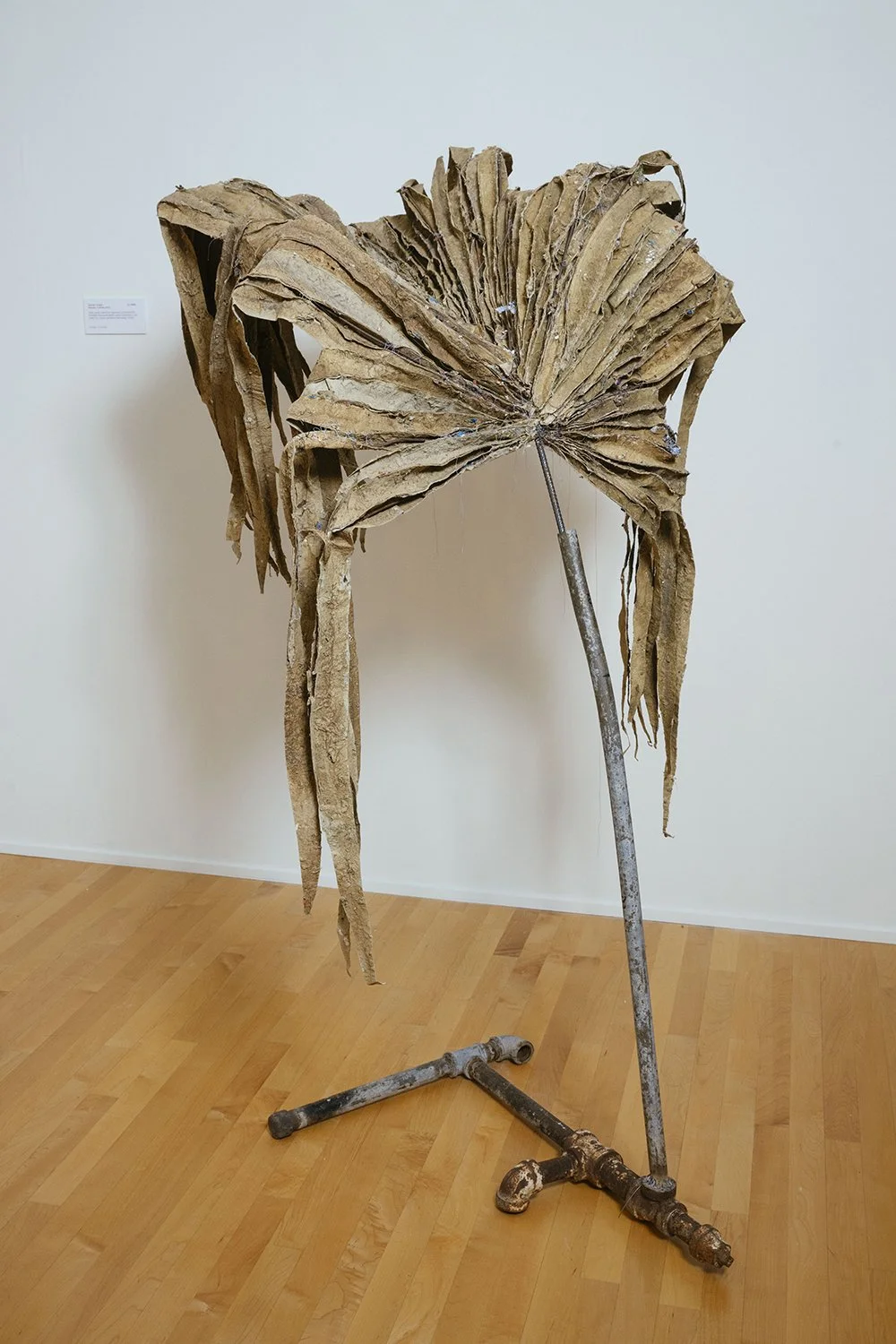
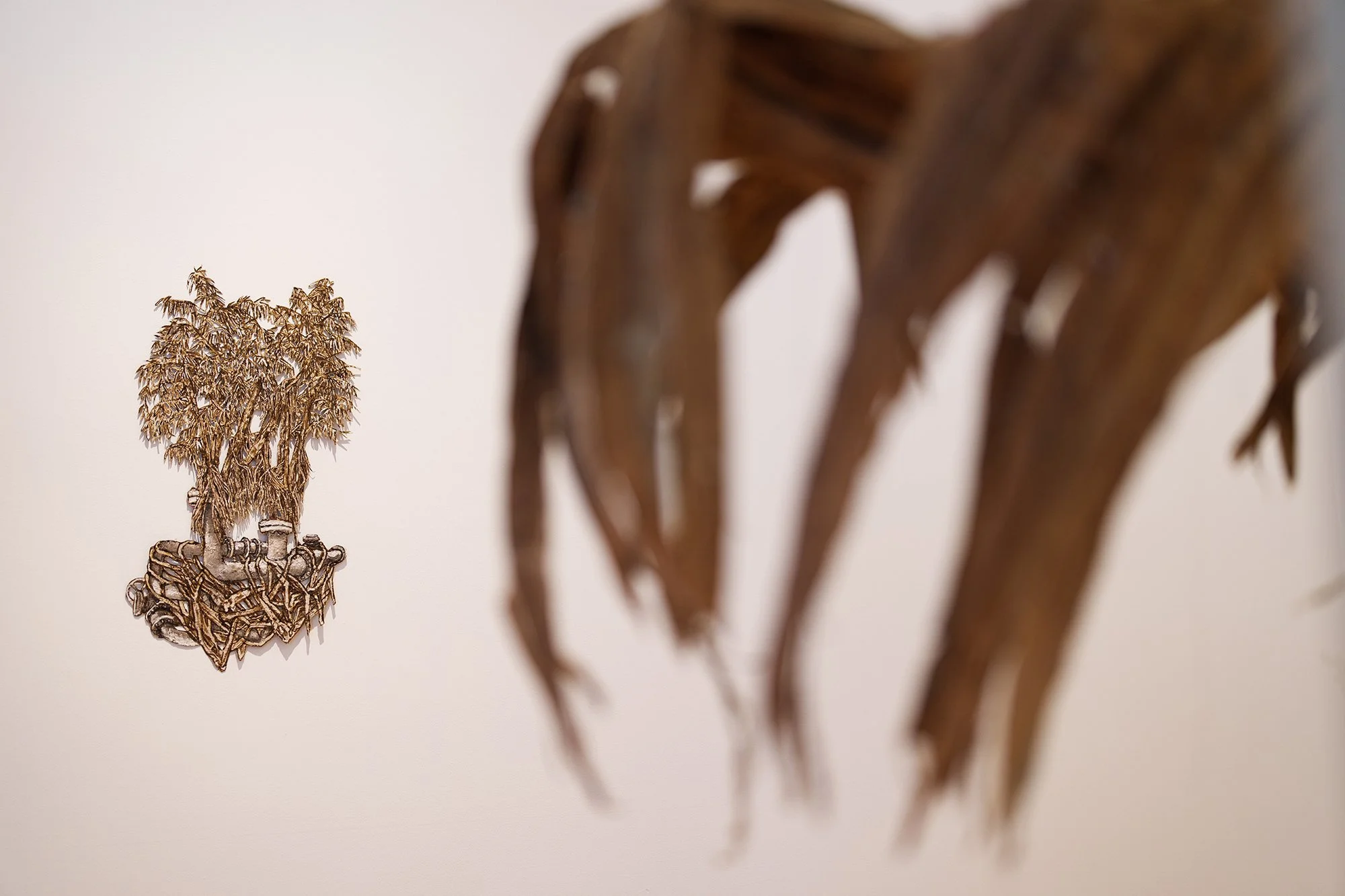
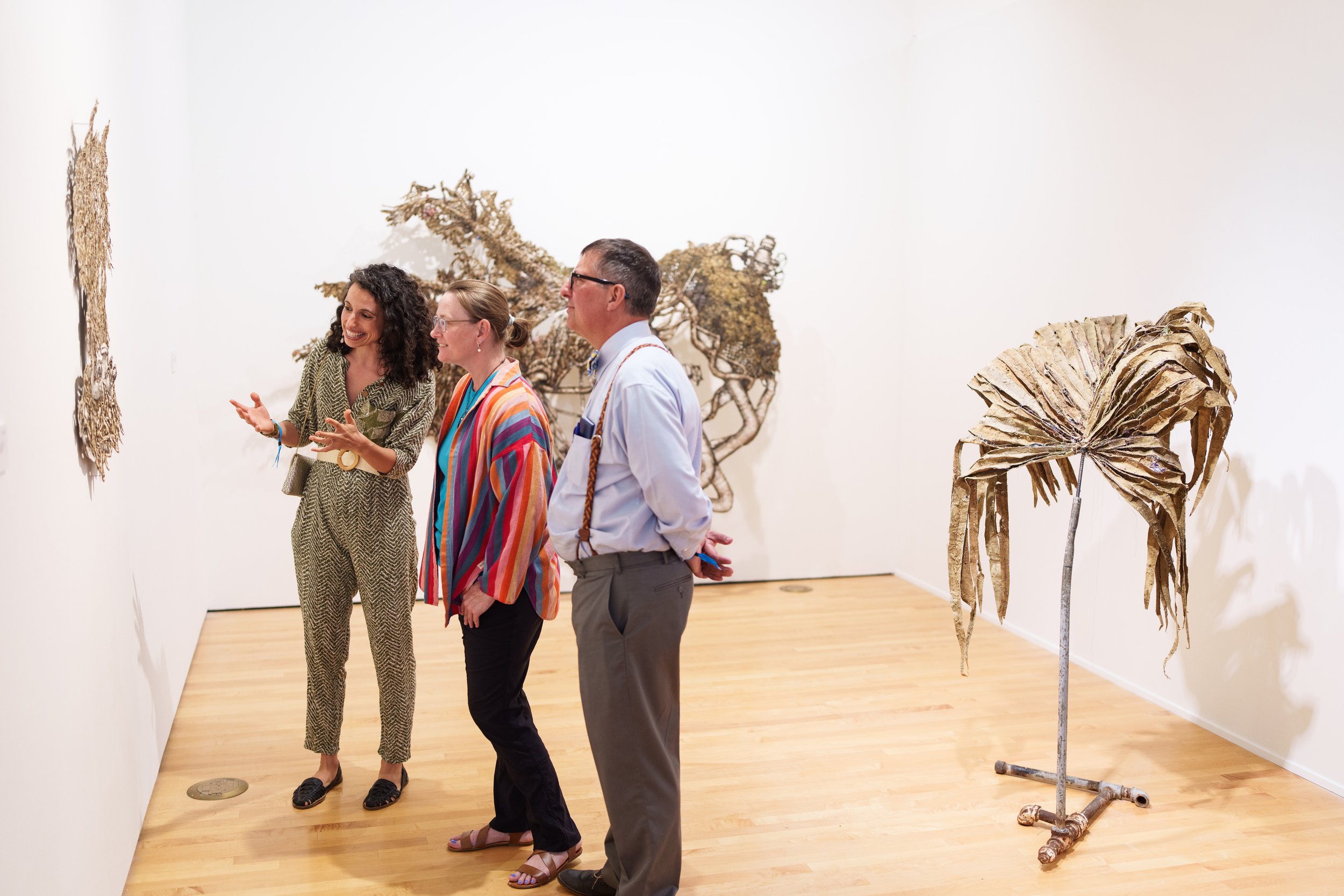
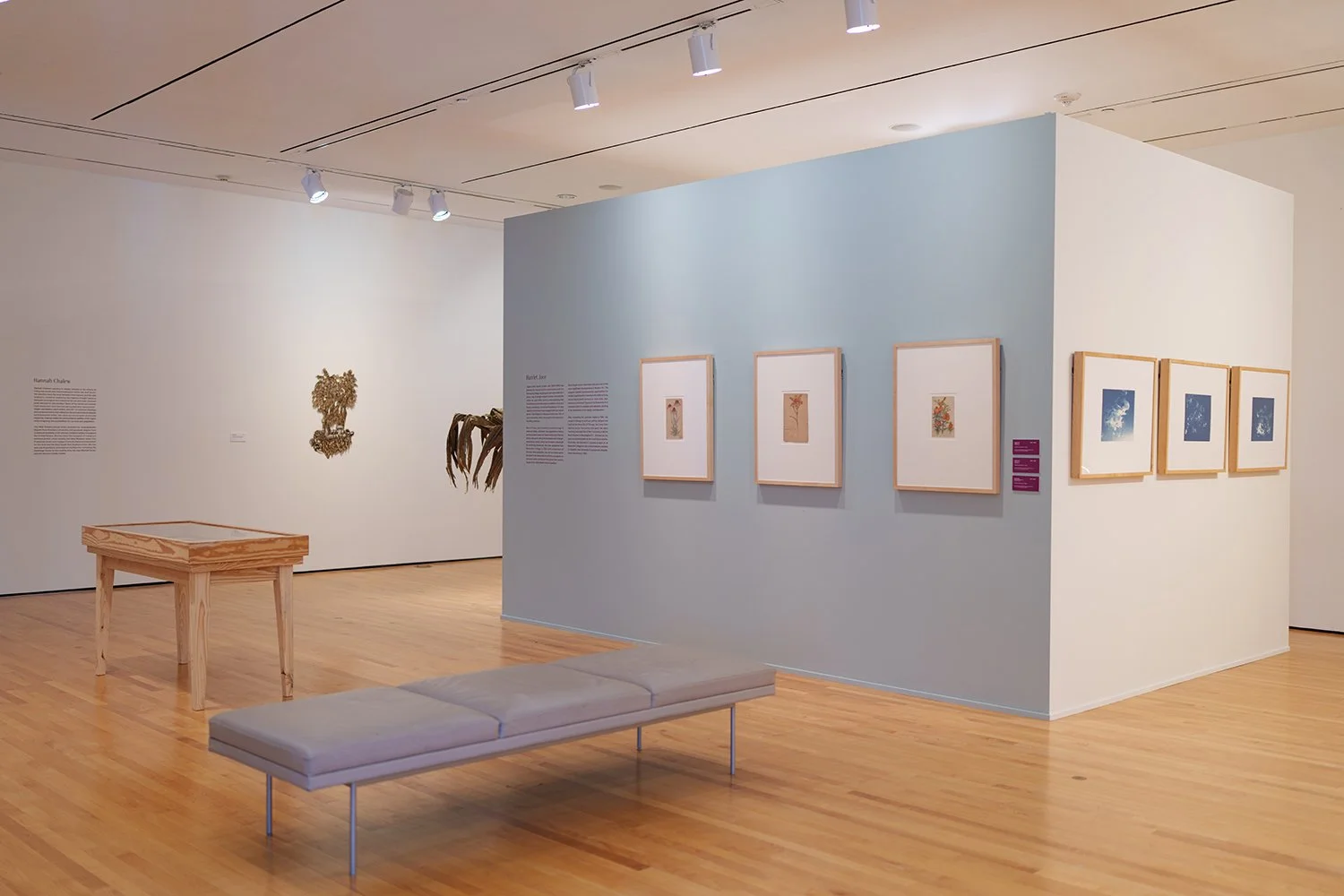
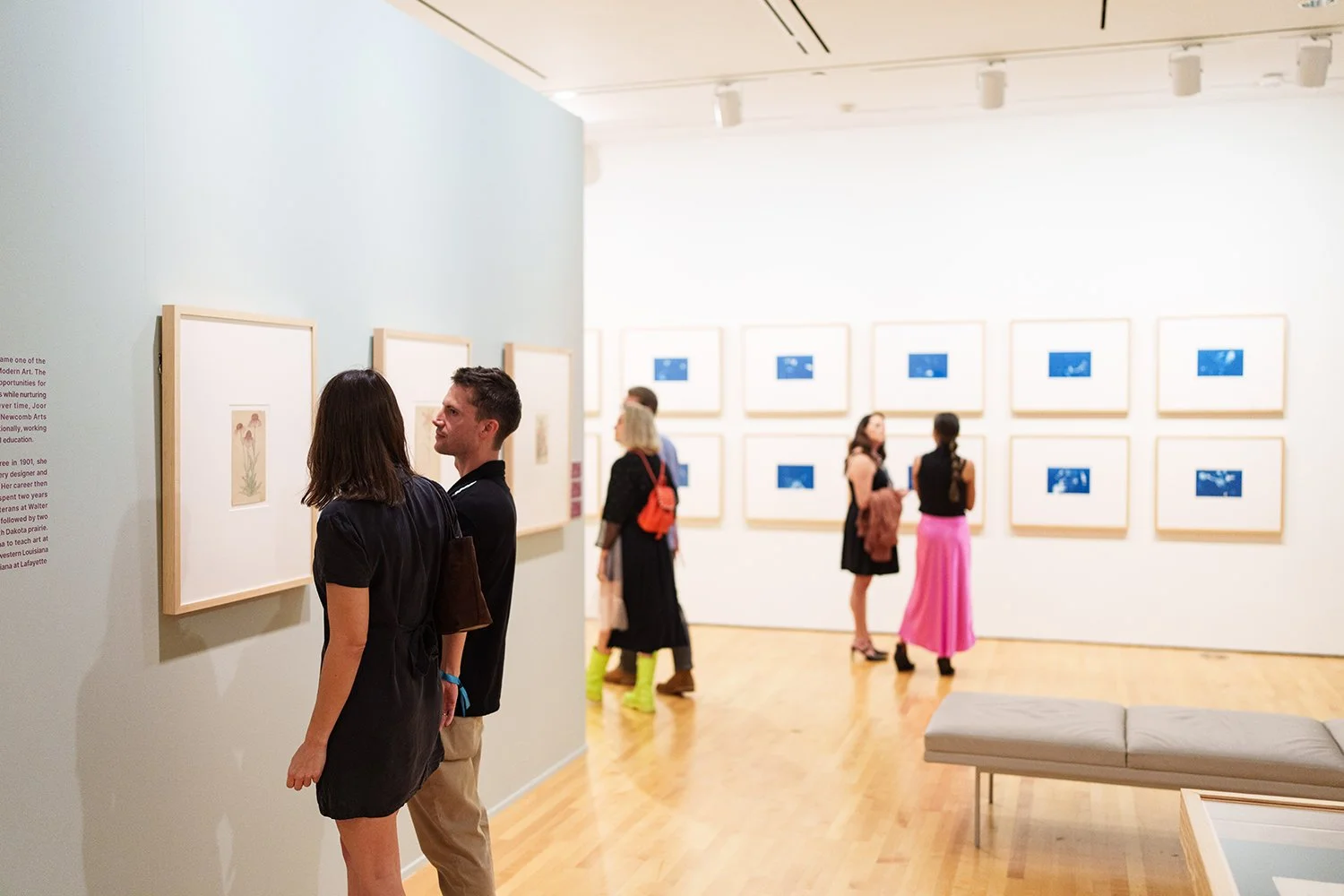
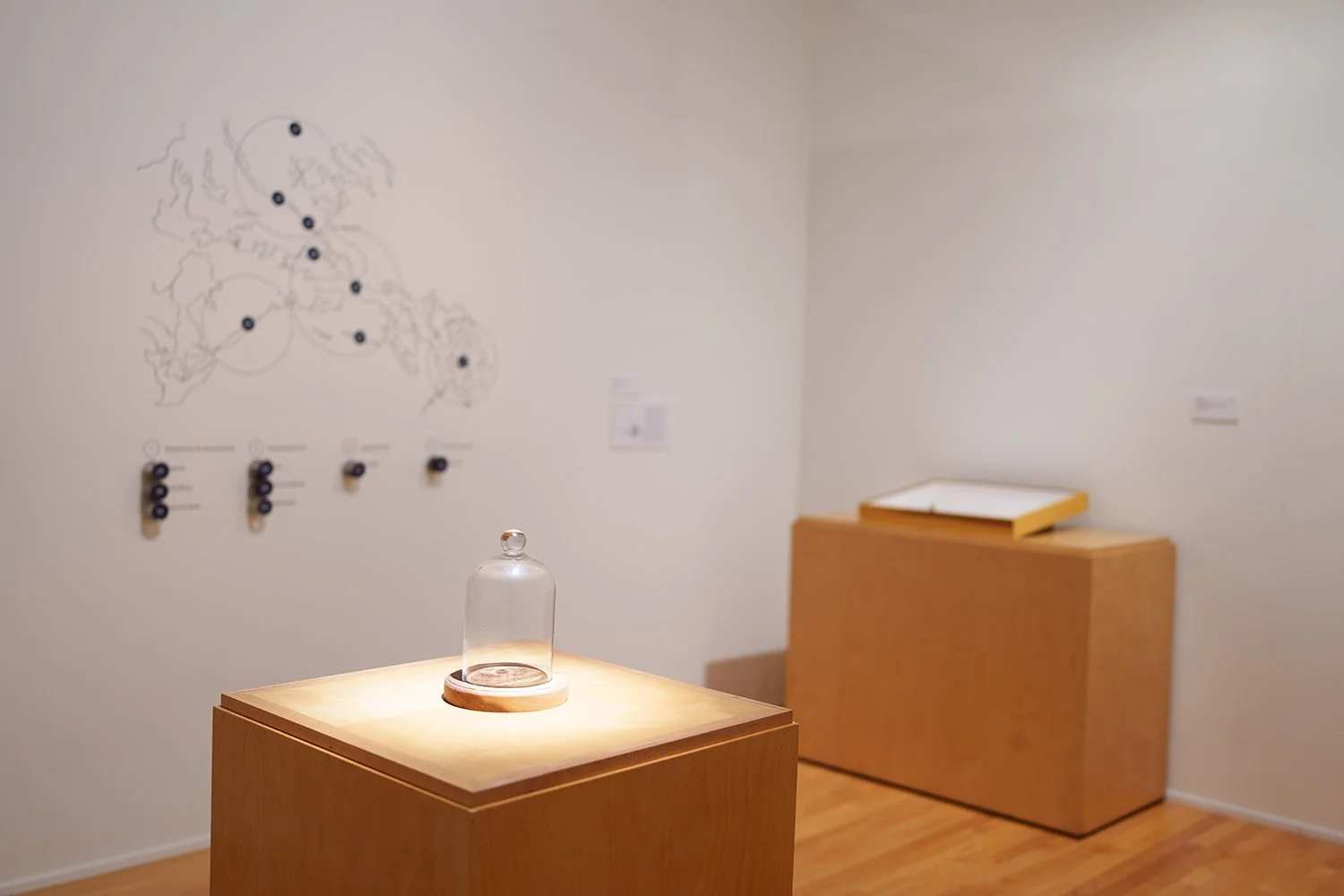
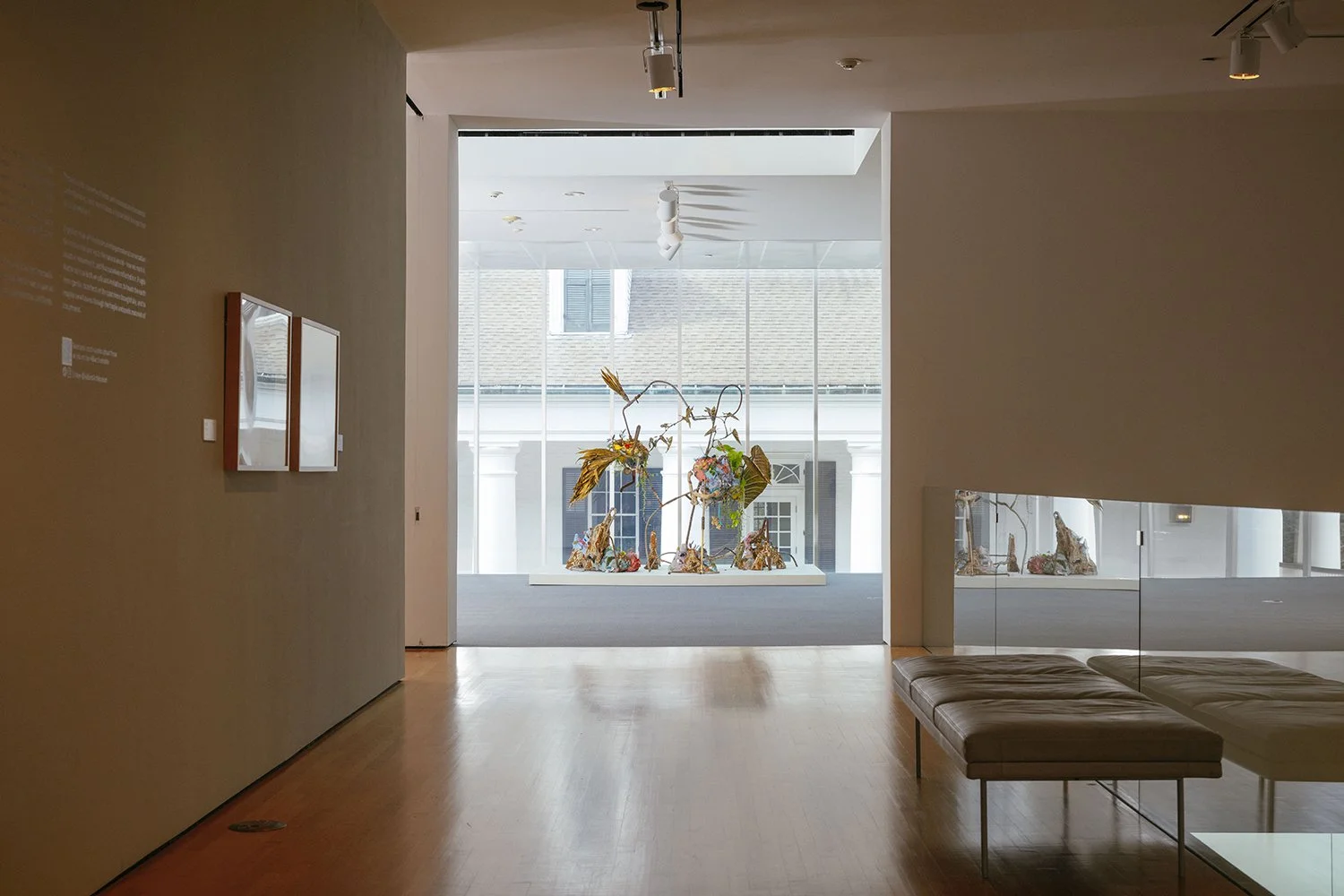
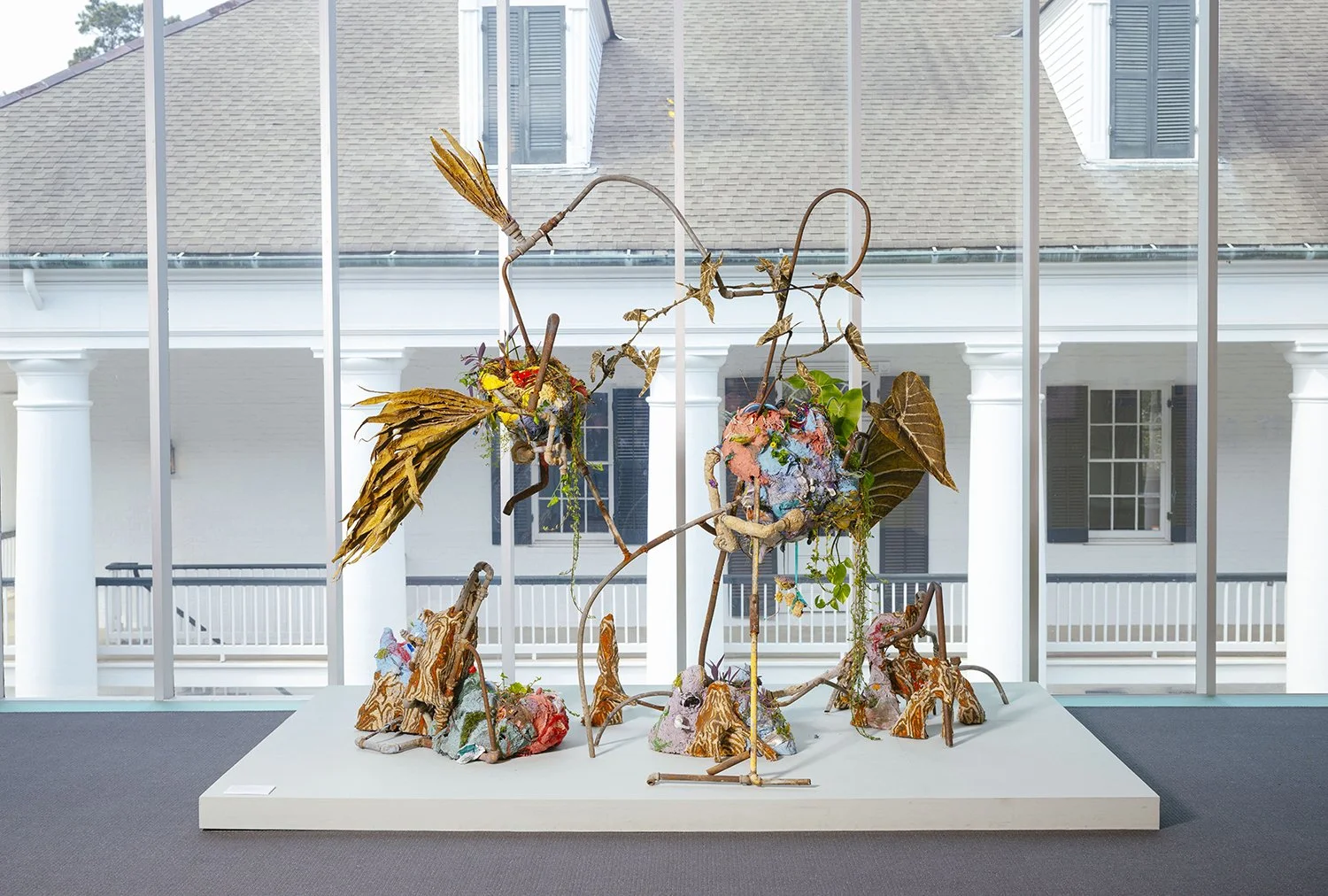
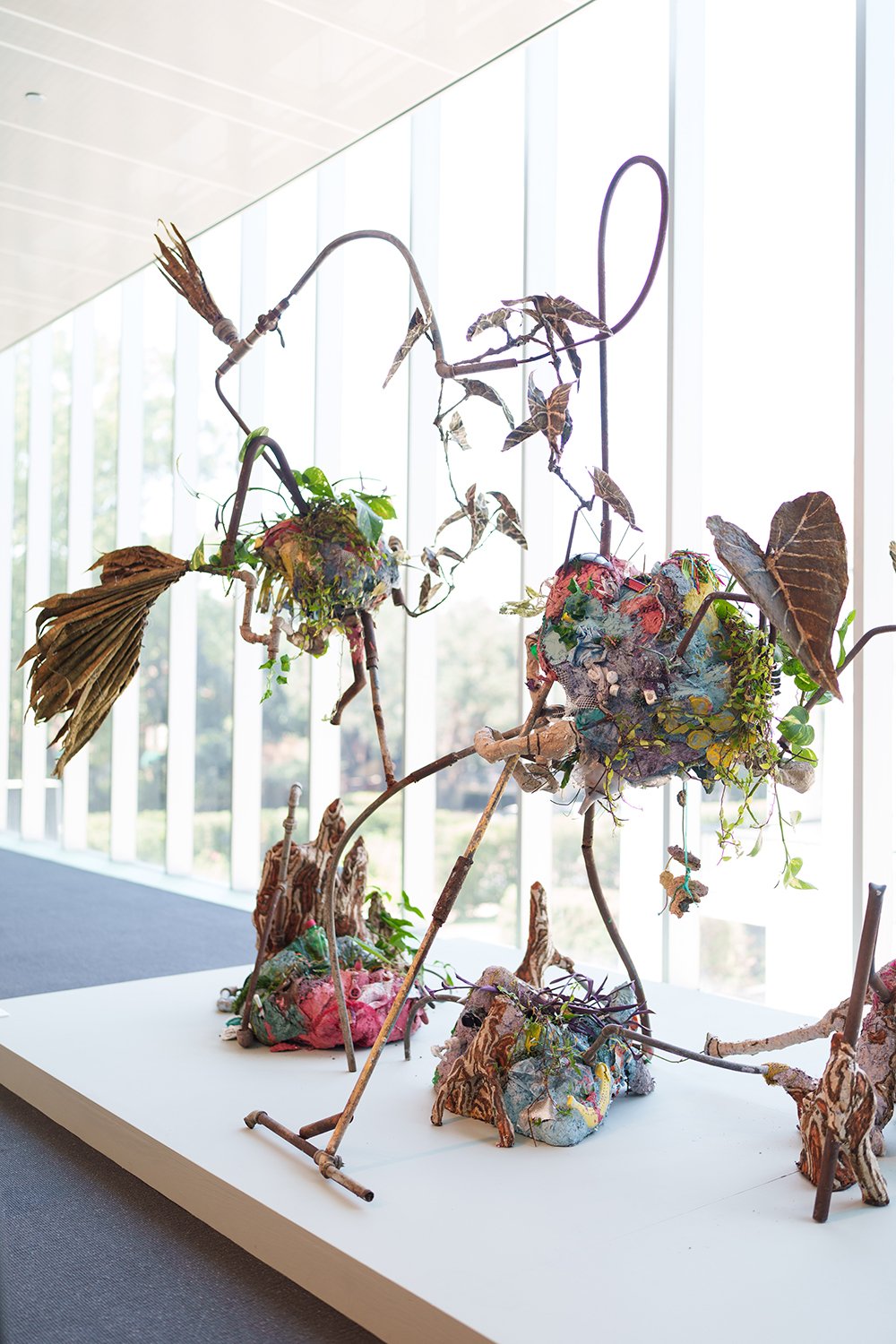
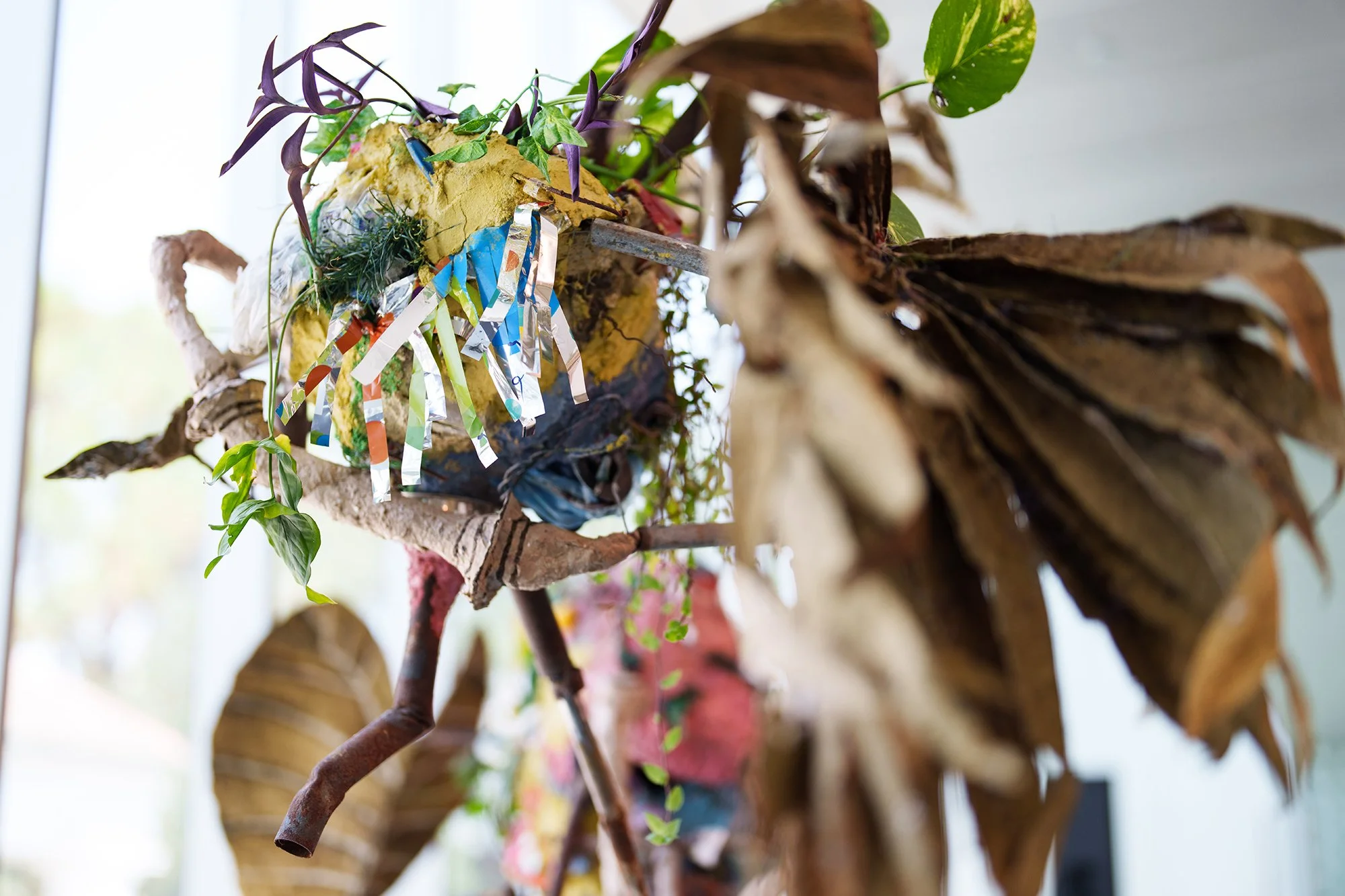
Documentation by Jason Cohen and Rush Jagoe
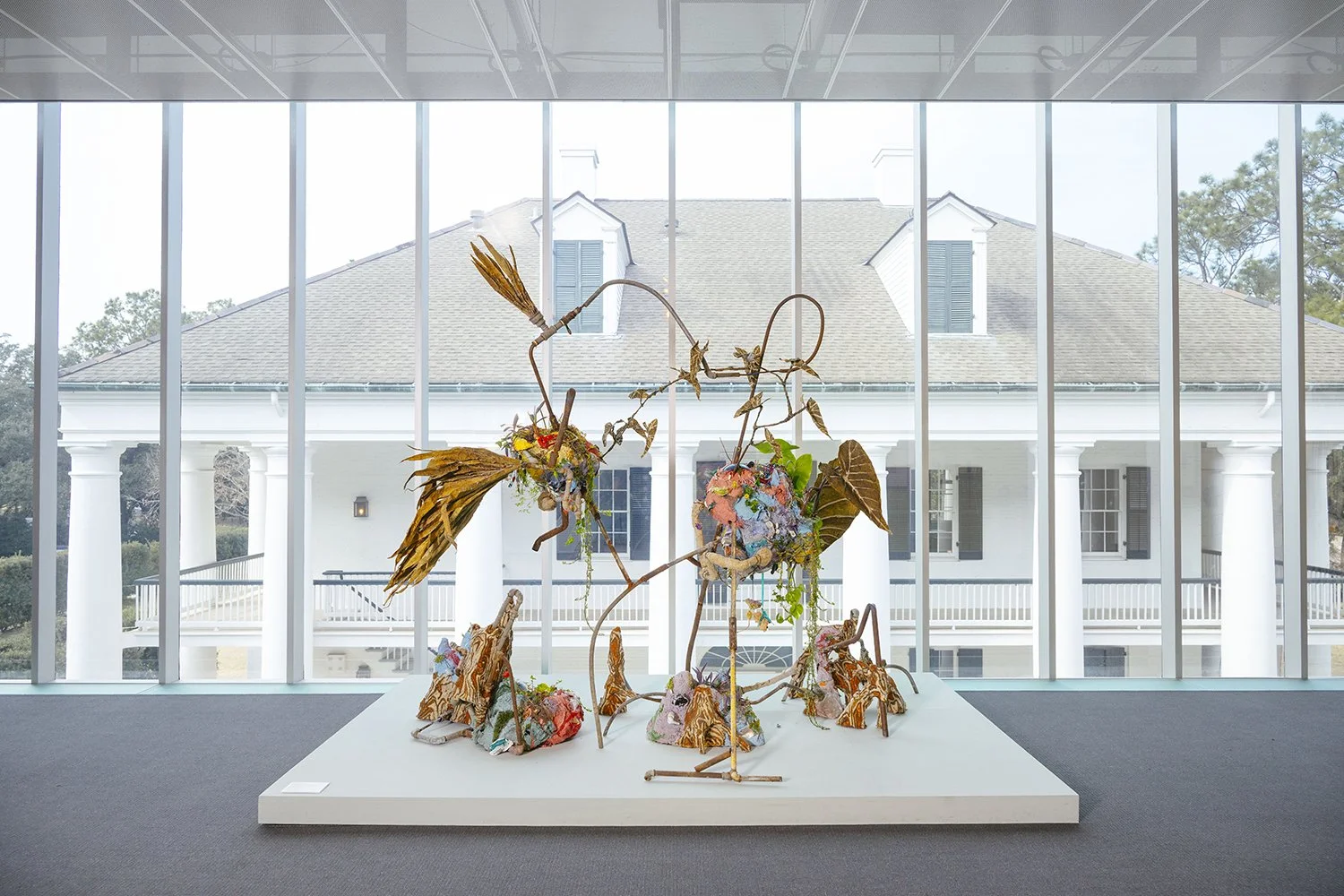
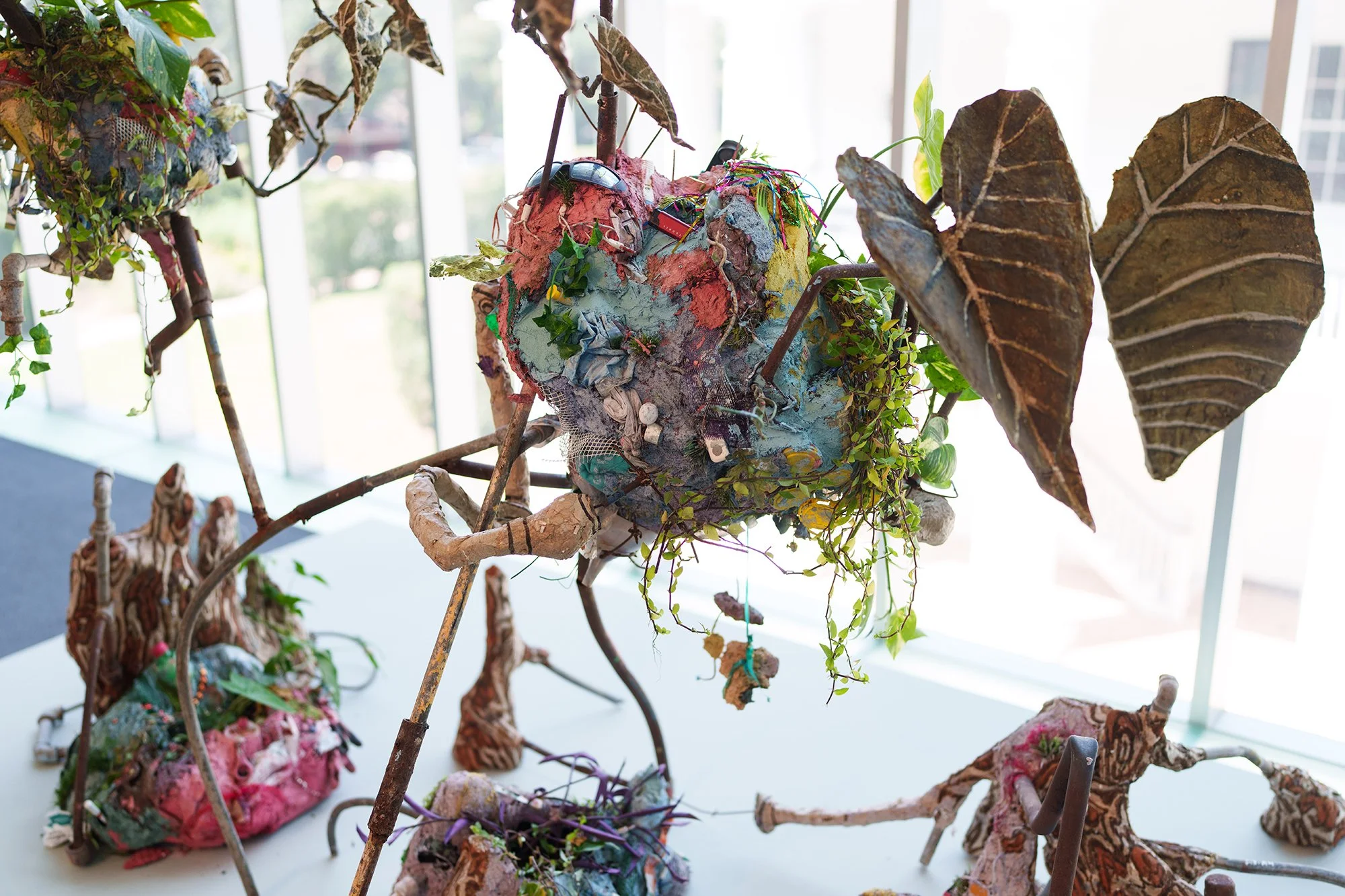
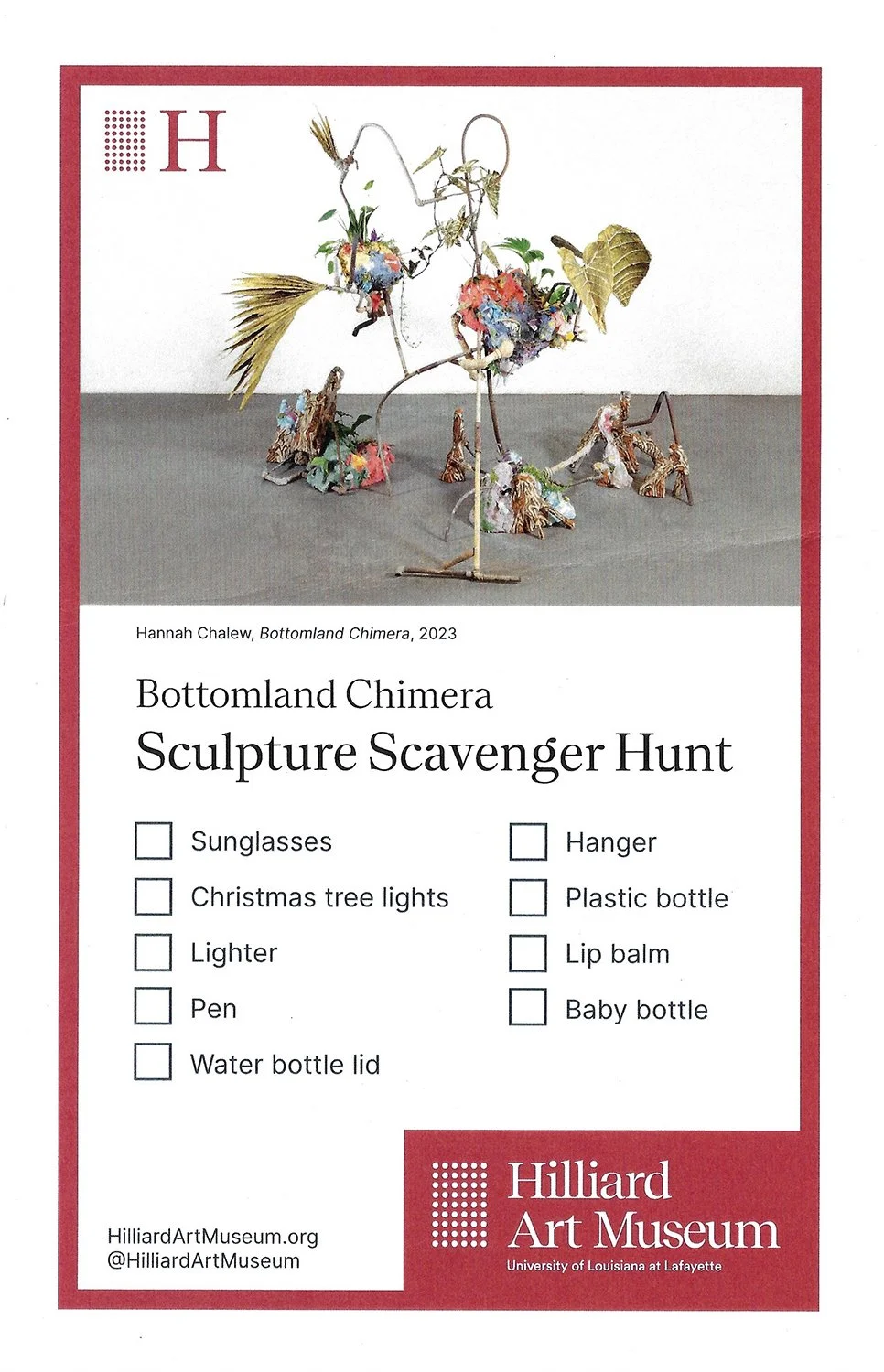
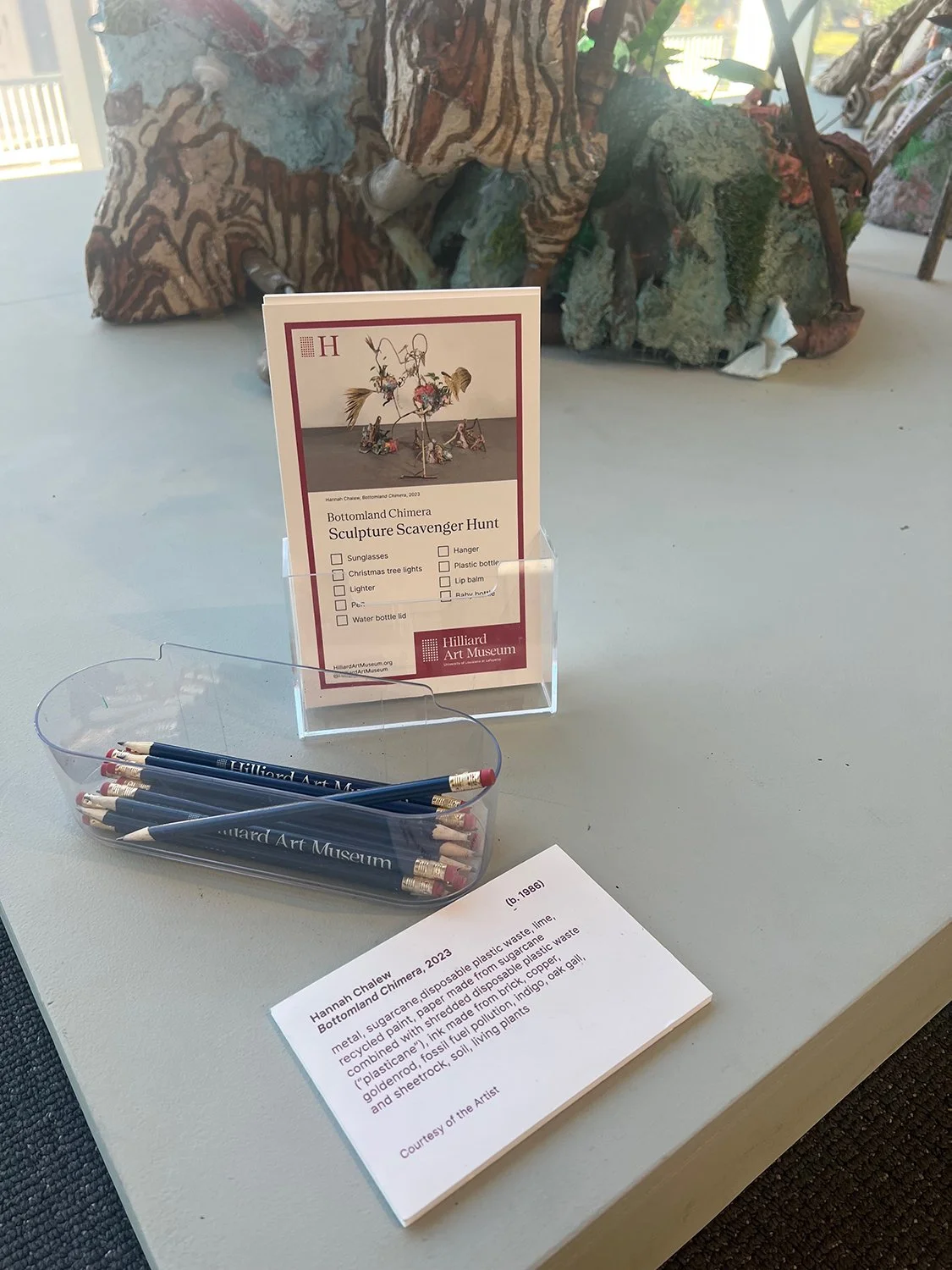
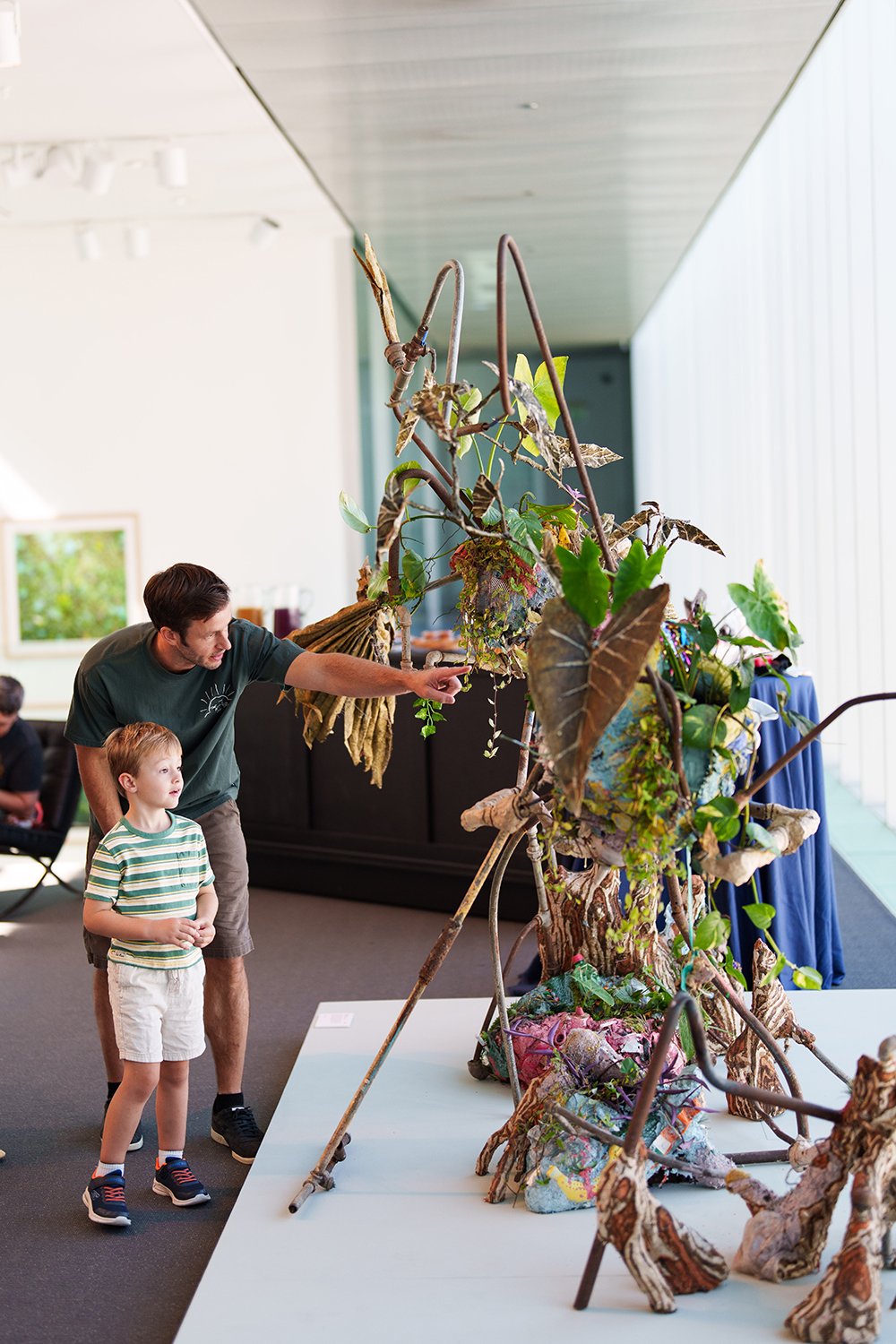
Because Bottomland Chimera incorporates living plants, it requires ample natural light, so the museum placed it in the mezzanine, directly in front of a wall of windows. Bathed in sunlight, the installation stands in stark contrast to the building behind it, the original museum structure, built in the 1960s as a replica of a plantation house. The museum itself is located in Lafayette’s Oil Center district, adding another layer of context for the work.
Bottomland Chimera draws on our region’s overlapping legacies of extraction, from enslavement to the petrochemical era, while reaching toward a different future, making its placement feel especially poignant.
Grateful to the Hilliard for holding space for this work and for the questions it asks about what we carry forward.